Gizmodo ran a story today that was clearly written by someone shaking with rage. I know because many of my own articles are written with rage. It stood out to me because Gizmodo is often witty but generally dry and emotionless. This was a rare opinion piece and I happen to disagree with it.
The article can be read here, but if you don't want to read it, it involves a man fishing for sharks who was then attacked and mauled by the shark. He's in intensive care and PETA is using his story as awareness about fishing. The Gizmodo writer's contention, as well as the title of the post, is that PETA doesn't give a shit about humans.
Here's the thing: PETA is an animal advocacy group. Specifically a non-human animal advocacy group. I'm sure that if the man was attacked by a shark while rescuing a child from a sinking rowboat PETA would not discuss his death at all. But the man was fishing, trying to kill sharks. So when a shark (almost) killed a human, PETA is supposed to care? Do we expect PETA to care when a matador is gored by a bull? Here in America, I think we all cheer for dead matadors. Do we expect the ACLU to care when someone in power is shut down?
I don't agree with everything that PETA does, but I am very glad that they exist. I am proud to support them. Their job isn't to care about the lives of human animals, their job is to care about the lives of non-human animals. Good job, PETA.

Thursday, September 29, 2011

Friday, July 15, 2011
Vegans are Obnoxious Assholes!
I know that I've discussed my frustration with the way that skeptics are treated in film and television. It's obnoxious and misleading, but from a storytelling perspective, I get it. Even I would prefer the film in which the skeptic who doubts aliens or magic is wrong - aliens and magic are cool.
What really bothers me, however, is how vegetarians and environmentalists are portrayed. They are always shown to be self-righteous and smug, they are always hypocritical and annoying. Perhaps these people really do exist in real life, but I've never met anyone who is environmentally conscious or vegetarian (which is a highly environmentally friendly lifestyle) for anything other than good motives.
I was watching the not-so-great movie Baby Mama the other night. Tina Fey's character worked for a highly exaggerated caricature of Whole Foods. At one point she went on a date to a raw food/vegan restaurant. They made comical faces at the yeast balls and seaweed they were served. Then after some hilariously awkward conversation, it turned out that, despite working for a company that was environmentally friendly, healthy and natural, she still liked to eat meat. Of course she does! Just because the company is full of obnoxious hypocrites, that doesn't mean that Tina Fey's character is a hypocrite. She loves to eat meat!
It may seem like a harmless stereotype, an easy joke that does no real damage, but I think that it is a real problem. It is important to point out that "environmentalism", and everything that entails, is a good thing. Climate change due to human activity is a scientifically established fact. Recycling and renewable energy are positive actions. Likewise, it is a fact that factory farms are a significant polluter and eating a meat-free diet is better for the environment than changing from a Hummer to a Prius. However you feel about the suffering of animals, most people value human life and comfort, and climate change affects us all. My point here is not that everyone should become vegetarian or reduce their energy and plastic consumption - I obviously do think that they should - but that we should not treat those who do those things as assholes or objects of ridicule.
I honestly do not know where the trope of the self-righteous vegan originated. As I said above, perhaps these people are real, but I can't understand that attitude and I seriously doubt that it makes up a large portion of the vegan/vegetarian population. At the core of this stereotype (I think) is the idea that vegans and vegetarians are hypocrites. The idea that they really do love to eat meat just like the rest of us, but they abstain in some kind of absurd and impotent protest. Not to speak for all vegetarians, but I don't abstain from meat for my sake. I do it for the animals. However much I might like the way a hamburger tastes, I don't eat it because of the animal that lived a miserable life and died for the sake of a cheap sandwich.
The point of all of this is not to be preachy. The point is that I am tired of seeing good deeds and noble aspirations mocked so easily and carelessly.
To give credit to my favorite television comedy, Britta from NBC's Community is a vegetarian and, although the character is sometimes obnoxious, she is well-rounded and a good person. Her vegetarianism (and atheism) is never made into a punchline.
What really bothers me, however, is how vegetarians and environmentalists are portrayed. They are always shown to be self-righteous and smug, they are always hypocritical and annoying. Perhaps these people really do exist in real life, but I've never met anyone who is environmentally conscious or vegetarian (which is a highly environmentally friendly lifestyle) for anything other than good motives.
I was watching the not-so-great movie Baby Mama the other night. Tina Fey's character worked for a highly exaggerated caricature of Whole Foods. At one point she went on a date to a raw food/vegan restaurant. They made comical faces at the yeast balls and seaweed they were served. Then after some hilariously awkward conversation, it turned out that, despite working for a company that was environmentally friendly, healthy and natural, she still liked to eat meat. Of course she does! Just because the company is full of obnoxious hypocrites, that doesn't mean that Tina Fey's character is a hypocrite. She loves to eat meat!
It may seem like a harmless stereotype, an easy joke that does no real damage, but I think that it is a real problem. It is important to point out that "environmentalism", and everything that entails, is a good thing. Climate change due to human activity is a scientifically established fact. Recycling and renewable energy are positive actions. Likewise, it is a fact that factory farms are a significant polluter and eating a meat-free diet is better for the environment than changing from a Hummer to a Prius. However you feel about the suffering of animals, most people value human life and comfort, and climate change affects us all. My point here is not that everyone should become vegetarian or reduce their energy and plastic consumption - I obviously do think that they should - but that we should not treat those who do those things as assholes or objects of ridicule.
I honestly do not know where the trope of the self-righteous vegan originated. As I said above, perhaps these people are real, but I can't understand that attitude and I seriously doubt that it makes up a large portion of the vegan/vegetarian population. At the core of this stereotype (I think) is the idea that vegans and vegetarians are hypocrites. The idea that they really do love to eat meat just like the rest of us, but they abstain in some kind of absurd and impotent protest. Not to speak for all vegetarians, but I don't abstain from meat for my sake. I do it for the animals. However much I might like the way a hamburger tastes, I don't eat it because of the animal that lived a miserable life and died for the sake of a cheap sandwich.
The point of all of this is not to be preachy. The point is that I am tired of seeing good deeds and noble aspirations mocked so easily and carelessly.
To give credit to my favorite television comedy, Britta from NBC's Community is a vegetarian and, although the character is sometimes obnoxious, she is well-rounded and a good person. Her vegetarianism (and atheism) is never made into a punchline.
Wednesday, June 1, 2011
My struggle with milk and eggs
There is a free book involved. Details below!
I try very hard to live my life as honestly as I can. There are, of course, many mistakes that I make, many cruelties that I inflict, many acts of kindness that I knowingly avoid. In spite of this, I have only a few consistent regrets, only a few constant sources of guilt. One of which is that I am not vegan.
 My view on vegetarianism is simple and straightforward: eating meat is morally wrong. Obviously factory farmed meats are reprehensible, but that says nothing about the actual act of killing for food. And I consider the act of killing for food to be immoral. Essentially it comes down to the right of one being to end the life of another and the reasons for doing so.
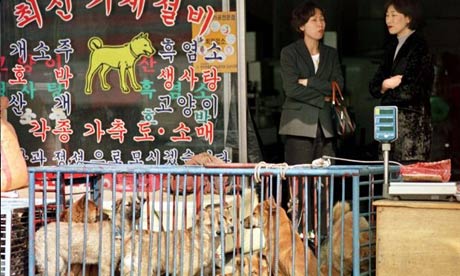 In America we consider the thought of eating dogs reprehensible, yet there is no real distinction between dogs and other animals. Any perceived difference between dogs and pigs is arbitrary and cultural. Pigs are at least as smart as dogs, and have social and family structures. And yet even the most "I LOVE BACON" carnivore would not consider eating even the stupidest dog.
Is this an emotional argument? I confess that a part of it certainly is, although there is compassion and logic to it as well. And as I follow the logic, I can't find a cause to call the consumption of animal products (milk, eggs, honey) immoral. Now, as with meat, factory-style dairy farms are clearly evil, but if I can be sure that the milk and eggs come from ethically run dairy farms then I will eat cheese without guilt. I even like the idea of raising my own chickens some day.
So this is my dilemma. It has an easy answer, and that is exactly what makes me feel so terrible about it: I shouldn't eat dairy products unless I know where they came from. But pizza! And cheese on sandwiches! And pastries! And breakfasts pretty much anywhere! This requires sacrifice and a disruption of my life. I am aware of the hypocrisy involved. I feel better - both spiritually and physically - when I eat only vegan foods. Eventually I believe that my guilt will overtake me and I will be a responsible, moral consumer.
My wife has pointed out on numerous occasions that the more I learn, the worse I feel. This is an undeniable fact. I would be happier not to know where meat comes from. Now that I do, not only am I unable to eat meat, but I am unable to even view a hamburger without feeling an immense sadness. As I mentioned above, my diet will eventually come in line with my morals, but what next? There is seemingly no end to the products produced through exploitation. Electronics, clothes, food, energy - all of these conveniences and necessities come at the expense of someone. Where do we draw the line? Maybe some lines cannot be reasonably drawn today, but that does not mean that we shouldn't try, right?
Free book details:
I have several copies of Jonathan Safran Foer's Eating Animals. It is a book that I highly recommend. It is not preachy or difficult to read. He presents the arguments for vegetarianism/veganism in a very simple and compelling manner. I am happy to give copies of this book away to anyone who is interested. Just email me and tell me your address and I will send you a copy (for as long as I have copies available). This is not a publicity stunt for me or the publisher. I simply purchased a number of copies and am giving them away to interested and curious parties.
I try very hard to live my life as honestly as I can. There are, of course, many mistakes that I make, many cruelties that I inflict, many acts of kindness that I knowingly avoid. In spite of this, I have only a few consistent regrets, only a few constant sources of guilt. One of which is that I am not vegan.
Is this an emotional argument? I confess that a part of it certainly is, although there is compassion and logic to it as well. And as I follow the logic, I can't find a cause to call the consumption of animal products (milk, eggs, honey) immoral. Now, as with meat, factory-style dairy farms are clearly evil, but if I can be sure that the milk and eggs come from ethically run dairy farms then I will eat cheese without guilt. I even like the idea of raising my own chickens some day.
So this is my dilemma. It has an easy answer, and that is exactly what makes me feel so terrible about it: I shouldn't eat dairy products unless I know where they came from. But pizza! And cheese on sandwiches! And pastries! And breakfasts pretty much anywhere! This requires sacrifice and a disruption of my life. I am aware of the hypocrisy involved. I feel better - both spiritually and physically - when I eat only vegan foods. Eventually I believe that my guilt will overtake me and I will be a responsible, moral consumer.
My wife has pointed out on numerous occasions that the more I learn, the worse I feel. This is an undeniable fact. I would be happier not to know where meat comes from. Now that I do, not only am I unable to eat meat, but I am unable to even view a hamburger without feeling an immense sadness. As I mentioned above, my diet will eventually come in line with my morals, but what next? There is seemingly no end to the products produced through exploitation. Electronics, clothes, food, energy - all of these conveniences and necessities come at the expense of someone. Where do we draw the line? Maybe some lines cannot be reasonably drawn today, but that does not mean that we shouldn't try, right?
Free book details:
I have several copies of Jonathan Safran Foer's Eating Animals. It is a book that I highly recommend. It is not preachy or difficult to read. He presents the arguments for vegetarianism/veganism in a very simple and compelling manner. I am happy to give copies of this book away to anyone who is interested. Just email me and tell me your address and I will send you a copy (for as long as I have copies available). This is not a publicity stunt for me or the publisher. I simply purchased a number of copies and am giving them away to interested and curious parties.
Tuesday, August 3, 2010
Vegetarian's Dilemma
There has not been a single decision I have made in my life that I feel better about than becoming vegetarian. And yet I have not been able to enjoy my decision. I have to contend with how I am perceived - I don't want to appear too radical or intense and I certainly don't want to appear smug or superior. I also have not been able to rest with my own apparent hypocrisy. As I have noted before, it is inconsistent for me to abstain from meat for moral reasons while still eating eggs and dairy products and wearing leather.
The decision to become vegetarian was not an easy one, although it was always the obvious choice. It was just easier to ignore the pressing guilt. I know that I am not alone - in my conversations about vegetarianisms with others I invariably hear "Good for you! I could never do that." Meat is just too delicious and the source is too easy to ignore. That's a real shame, because I have become convinced that meat is an obvious and objective cruelty. This is rapidly becoming a very important cause for me.
Eating meat in itself is not cruel. Although I will never eat meat again, I acknowledge that the consumption of animal flesh is not inherently wrong. However, in our modern society, 99% of all meat (this includes beef, pork and poultry) is produced on factory farms. These are absolutely cruel places and there is no moral justification I can think of that would mitigate the consumption of these creatures. I have to imagine that people who eat meat do not know how cruel and inhumane (an odd word) factory farms actually are. I have to imagine that if people knew, then they would stop eating meat instantly. If I thought that people knew what the farms were like and continued to eat meat, continued to support this viciously cruel industry without so much as a blink, then I would be forced to dismiss their "morality" with contempt.
I realize that this makes me an asshole. I realize that this means I think fully educated carnivores are bad people. I am truly sorry for that. Please believe me when I say that although I see a vegetarian diet as morally superior in every aspect, there is no sense of competition for status with carnivores. I would like nothing more than to be a friend to all humans, but I simply cannot. This is too big of a problem for me to ignore, too big for any of us to ignore. The welfare of animals is more important to me than the possible hurt feelings of humans.
This is a link to a film titled Meet your Meat. It is vicious and hard to watch. It isn't slaughter - it is deliberate, intentional and unnecessary cruelty toward animals that are obviously suffering. If you are unable to watch (as I am), if you are unwilling to see what goes into the making of your food because you know what you will see then you should follow the obvious moral path and change your eating habits.
As I said at the top, the implications of all of this are not easy, even for me. It was easy to give up meat and leather, but not so easy to give up dairy - I am still working through the logistics of that. It is also difficult for me, as a dog owner. I have no illusions about the source of the food and treats we provide our pets. I honestly don't know where this leaves me. Although the cruelty of the food source is undeniable, there are no health issues associated with a vegetarian diet for humans - in all the research I have read, a vegetarian diet is healthier. But dogs are carnivores. Meat is essential to their diet. I can't deny them what they require, but is the relative health of my pampered pets worth the life and happiness that other animals are forced to give up? I don't have an answer right now.
I have just finished reading Jonathan Safran Foer's fantastic book Eating Animals. I highly recommend it to anyone who is interested in the subject. I feel so strongly about it, in fact, that I am willing to purchase a copy and send it to you if you are unable to procure it for yourself. I promise that it is less abrasive than I have been in this post. And I really am sorry for the terse tone. I don't want to come off as a morally superior asshole, but I am motivated by the plight of billions of beings who are suffering for the sake of industry. I am certainly not blameless, I am not proud of myself, but I strongly believe that eating meat is morally indefensible. I would like nothing more than for all of my readers to become vegetarians.
I welcome all comments, as well as ideas for dog food.
The decision to become vegetarian was not an easy one, although it was always the obvious choice. It was just easier to ignore the pressing guilt. I know that I am not alone - in my conversations about vegetarianisms with others I invariably hear "Good for you! I could never do that." Meat is just too delicious and the source is too easy to ignore. That's a real shame, because I have become convinced that meat is an obvious and objective cruelty. This is rapidly becoming a very important cause for me.
Eating meat in itself is not cruel. Although I will never eat meat again, I acknowledge that the consumption of animal flesh is not inherently wrong. However, in our modern society, 99% of all meat (this includes beef, pork and poultry) is produced on factory farms. These are absolutely cruel places and there is no moral justification I can think of that would mitigate the consumption of these creatures. I have to imagine that people who eat meat do not know how cruel and inhumane (an odd word) factory farms actually are. I have to imagine that if people knew, then they would stop eating meat instantly. If I thought that people knew what the farms were like and continued to eat meat, continued to support this viciously cruel industry without so much as a blink, then I would be forced to dismiss their "morality" with contempt.
I realize that this makes me an asshole. I realize that this means I think fully educated carnivores are bad people. I am truly sorry for that. Please believe me when I say that although I see a vegetarian diet as morally superior in every aspect, there is no sense of competition for status with carnivores. I would like nothing more than to be a friend to all humans, but I simply cannot. This is too big of a problem for me to ignore, too big for any of us to ignore. The welfare of animals is more important to me than the possible hurt feelings of humans.
This is a link to a film titled Meet your Meat. It is vicious and hard to watch. It isn't slaughter - it is deliberate, intentional and unnecessary cruelty toward animals that are obviously suffering. If you are unable to watch (as I am), if you are unwilling to see what goes into the making of your food because you know what you will see then you should follow the obvious moral path and change your eating habits.
As I said at the top, the implications of all of this are not easy, even for me. It was easy to give up meat and leather, but not so easy to give up dairy - I am still working through the logistics of that. It is also difficult for me, as a dog owner. I have no illusions about the source of the food and treats we provide our pets. I honestly don't know where this leaves me. Although the cruelty of the food source is undeniable, there are no health issues associated with a vegetarian diet for humans - in all the research I have read, a vegetarian diet is healthier. But dogs are carnivores. Meat is essential to their diet. I can't deny them what they require, but is the relative health of my pampered pets worth the life and happiness that other animals are forced to give up? I don't have an answer right now.
I have just finished reading Jonathan Safran Foer's fantastic book Eating Animals. I highly recommend it to anyone who is interested in the subject. I feel so strongly about it, in fact, that I am willing to purchase a copy and send it to you if you are unable to procure it for yourself. I promise that it is less abrasive than I have been in this post. And I really am sorry for the terse tone. I don't want to come off as a morally superior asshole, but I am motivated by the plight of billions of beings who are suffering for the sake of industry. I am certainly not blameless, I am not proud of myself, but I strongly believe that eating meat is morally indefensible. I would like nothing more than for all of my readers to become vegetarians.
I welcome all comments, as well as ideas for dog food.
Subscribe to:
Posts (Atom)